
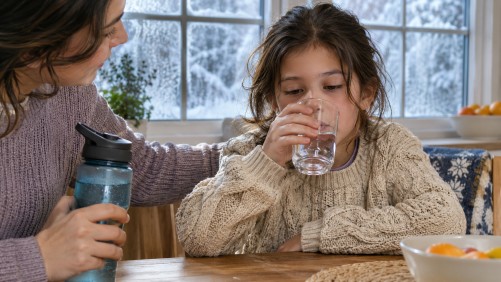
As temperatures drop, parents might overlook the risk of dehydration in children during the winter months. Despite the cold weather, children can still become dehydrated as their natural urge to drink water decreases, posing potential health concerns.
Dehydration is not exclusive to hot weather. Even though children may sweat less in winter, their bodies still require adequate fluid intake to maintain normal bodily functions, such as digestion and waste removal. The colder climate often leads to reduced water consumption, raising the risk of dehydration and related issues like constipation. Parents should monitor their children’s hydration levels by observing any changes in their drinking habits and restroom routines.
Four key signs can help identify dehydration in children during winter. Dark-coloured urine may indicate insufficient fluid intake, as it suggests the urine is more concentrated. Reduced frequency of urination can also be a red flag. Additionally, constipation or hard and dry stools can result from not drinking enough water, making bowel movements uncomfortable for children.
To prevent dehydration, parents can adopt several strategies to ensure their children stay hydrated throughout winter. Offering small amounts of water regularly, rather than waiting for the child to feel thirsty, is one effective method. Including warm soups, homemade broths, and water-rich fruits like oranges and grapes in their diet can also contribute to adequate fluid intake. Serving warm drinks, such as milk, can be another convenient way to boost hydration levels.
Establishing regular drinking habits is crucial. Encourage children to consume water after waking up, between meals, and before or after outdoor activities. Parents should keep an eye on their children’s energy levels, urination frequency, and bowel movements to catch any signs of severe dehydration. If symptoms such as unusual drowsiness, a very dry mouth, sunken eyes, or an inability to retain fluids occur, immediate medical attention is advised.
By making hydration a part of their daily routine, parents can help prevent winter dehydration and support their children’s overall health and well-being during the colder months. Simple habits can make a significant difference in maintaining proper hydration levels and ensuring normal bodily functions.