
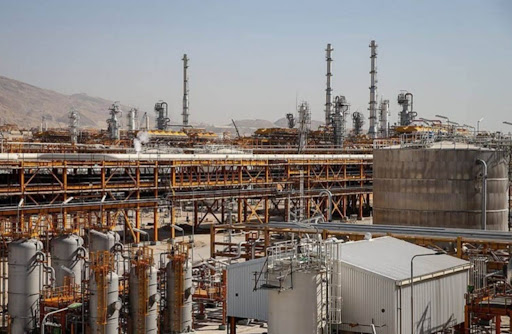
Iran threatened the Gulf’s petrochemical heartland on Wednesday after Israeli forces bombed the South Pars gasfield in a major escalation that broke months of restraint around energy infrastructure. The Revolutionary Guards named specific facilities in Saudi Arabia, the UAE, and Qatar and ordered workers to evacuate. Oil prices surged toward $110 a barrel as the conflict entered its most economically destructive phase.
South Pars, the world’s largest natural gas reserve, is shared between Iran and Qatar and has been the backbone of Iran’s energy economy throughout the conflict. The Israeli bombing — reportedly with US consent — was the first direct attack on Iranian fossil fuel production. Washington and Tel Aviv had previously avoided this step, understanding that crossing it could trigger exactly the kind of sweeping response now materializing.
Targeted facilities listed by Iran’s state media included Saudi Arabia’s Samref refinery and Jubail complex, the UAE’s al-Hosn gasfield, and Qatar’s Mesaieed complex and Ras Laffan refinery. All personnel were told to evacuate without delay. The Asaluyeh governor condemned the US-Israeli attack as “political suicide” and declared Iran was now engaged in a full-scale economic war.
Brent crude climbed to $108.60 per barrel — nearly 5% higher — while European gas benchmarks surged more than 7.5% to above €55.50 per megawatt hour. Gulf oil exports had already been cut by 60% from pre-war volumes due to infrastructure damage and Iran’s Strait of Hormuz blockade. Iran had maintained its own crude exports through the strait while choking off its neighbors’ shipments — a strategic weapon that had given it significant economic leverage throughout the conflict.
Qatar’s government spokesperson warned that attacking energy infrastructure endangered global energy security, the environment, and millions of regional residents. The threat to the Gulf’s petrochemical heartland represented a new and alarming dimension of the conflict — one with the potential to disrupt supply chains far beyond the energy sector. The coming hours would determine whether the threat would be carried out and what global consequences would follow.