
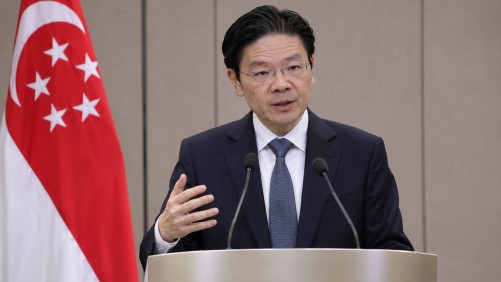
Singapore is actively collaborating with the United States to prevent the illegal rerouting of American-made microchips, particularly advanced AI chips, through its territory. This initiative aims to ensure compliance with U.S. export restrictions, which are designed to control the flow of sensitive technology to unauthorized destinations, including China. Prime Minister Lawrence Wong announced this effort during a press briefing in Australia, highlighting Singapore’s commitment to upholding international trade regulations.
In response to U.S. concerns about potential violations involving Nvidia AI chips, Singapore is conducting its own investigations into companies suspected of breaching local laws by transferring advanced semiconductor technology without authorization. Although Singapore is not directly involved in the U.S. investigation into Nvidia, it is cooperating with American authorities by enhancing information-sharing mechanisms to better monitor and enforce semiconductor trade regulations.
Prime Minister Wong confirmed that Singapore had investigated a company named Megaspeed and an individual associated with it over alleged chip-export violations. However, the investigation did not yield sufficient evidence to warrant further prosecution. This underscores the complexity of enforcing trade regulations in the technologically advanced semiconductor sector.
The U.S. has recently tightened export controls on advanced AI chips, requiring data centers in several countries, including Singapore, Malaysia, Thailand, Indonesia, and Brazil, to obtain U.S. licenses for certain shipments to Chinese customers. This measure is part of a broader strategy to safeguard cutting-edge technology from reaching unauthorized entities.
In a related development, Singapore and Australia have agreed to bolster their cooperation in the field of artificial intelligence. This partnership includes exploring the potential for increased cross-border data flows to support technological development and enhance digital collaboration between the two nations.