
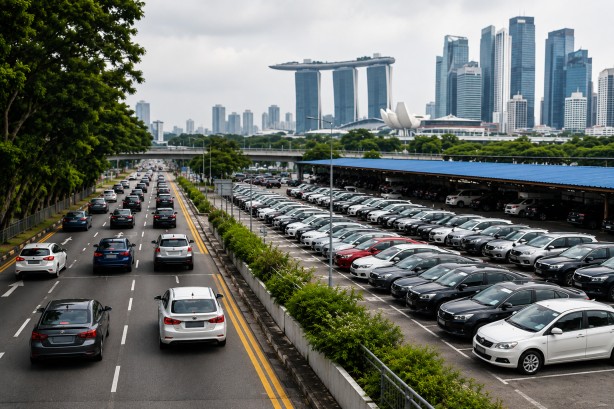
Singapore is witnessing a notable decline in its private car population, which has plummeted to the lowest levels observed since 2019. This trend is largely fueled by the rising costs associated with vehicle ownership, pushing more residents towards alternatives such as leasing, car-sharing, and ride-hailing services. By the end of June, private cars represented 79% of Singapore’s total car population, a decrease from 82.5% in 2021. Meanwhile, rental vehicles have surged to a record 14.9% share of the market.
Experts in the automotive industry point to persistently high Certificate of Entitlement (COE) premiums as a significant factor contributing to the decline in private car ownership. These premiums have made owning a car considerably more expensive, prompting a shift in consumer behavior towards more cost-effective mobility solutions.
The increasing preference for rental services has led leasing companies to expand their fleets to meet demand. As a result, many residents are opting to forego car ownership in favor of using public transport or shared mobility services, which help them reduce their monthly expenses.
This transition reflects a broader trend in Singapore’s transportation landscape, where the cost of car ownership is driving innovation and adaptation among both consumers and service providers. The growing reliance on alternative transportation methods underscores the evolving nature of mobility in the city-state.