
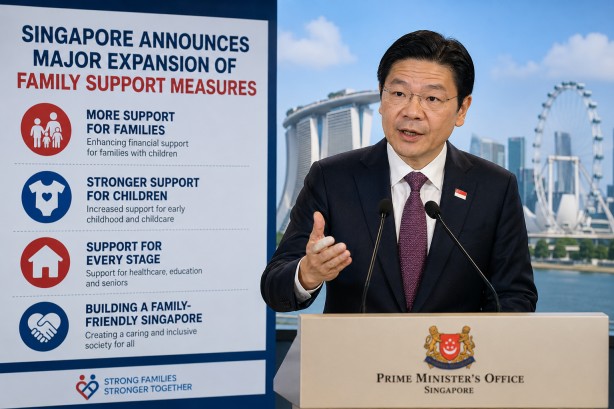
In an effort to address its declining fertility rate, Singapore is set to roll out a comprehensive suite of support measures for families, Prime Minister Lawrence Wong announced. With the nation’s total fertility rate plummeting to a historic low of 0.87 in 2025, these initiatives aim to encourage marriage and parenthood by easing the financial and practical burdens of raising children.
Among the key measures, working parents will benefit from an increase in annual childcare leave, ranging from 8 to 12 days, contingent on the number of children under the age of 12. Additionally, each child born in Singapore will receive close to S$70,000 in direct financial support from birth until they turn 17. These provisions reflect a shift in government policy towards offering more consistent support throughout childhood, rather than focusing benefits predominantly around the time of childbirth.
Financial considerations are also being addressed with planned reductions in childcare and infant-care fees. By 2030, full-day childcare fees are expected to drop to S$150 per month, with similar reductions for infant-care costs. These changes are designed to make childcare more accessible and affordable for families, easing a significant financial burden for working parents.
In addition to childcare support, the Singapore government is broadening access to public housing. The income ceiling for eligibility to apply for Build-to-Order (BTO) flats will be raised to S$16,000, while the limit for executive condominiums will increase to S$18,000. Furthermore, first-time families will gain an additional ballot opportunity for each child they have or are expecting, enhancing their chances of securing a home.
Prime Minister Wong emphasized the importance of these initiatives as part of a broader strategy to support families throughout the journey of raising children. By expanding financial assistance and improving access to essential services like childcare and housing, the government aims to alleviate some of the challenges families face, thereby fostering a more conducive environment for raising the country’s next generation.