
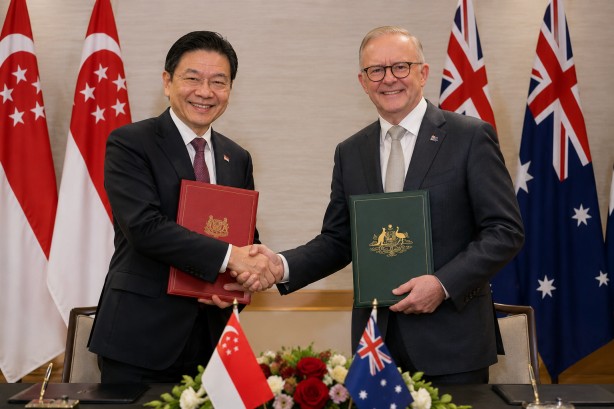
Singapore and Australia have fortified their strategic ties through the signing of two pivotal agreements aimed at bolstering supply chain resilience and ensuring the seamless exchange of essential goods and defense materials between the nations. These agreements mark a significant step in enhancing bilateral cooperation, particularly in the realms of trade and defense.
A central component of the new accords is a legally binding arrangement that enhances the existing free trade framework between the two countries. This agreement commits both parties to refrain from imposing export restrictions on critical energy products, notably diesel and liquefied natural gas (LNG). Additionally, it establishes mechanisms for consultation and collaboration to maintain supply chain resilience during periods of disruption, underscoring the commitment of both nations to uninterrupted trade flows.
In the arena of defense, Singapore and Australia have inked a defense industrial cooperation agreement. This pact is designed to streamline military logistics and equipment transfers, support joint defense initiatives, and fortify the resilience of defense supply chains. By focusing on these areas, the agreement aims to enhance military collaboration and ensure that both countries can respond more effectively to shared security challenges.
Beyond immediate trade and defense concerns, the agreements also highlight a mutual interest in exploring emerging technological and security domains. Both nations have pledged to deepen cooperation in fields such as artificial intelligence and submarine cable security, areas that are increasingly vital to national and regional security. This commitment not only strengthens their strategic partnership but also positions them to address future challenges collaboratively.
Collectively, these agreements signal a robust commitment by Singapore and Australia to reinforce their longstanding partnership. By prioritizing trade, defense, and emerging technology cooperation, the two countries are setting the stage for a more resilient and integrated future, ensuring that their strategic interests are well-protected in an increasingly complex global landscape.